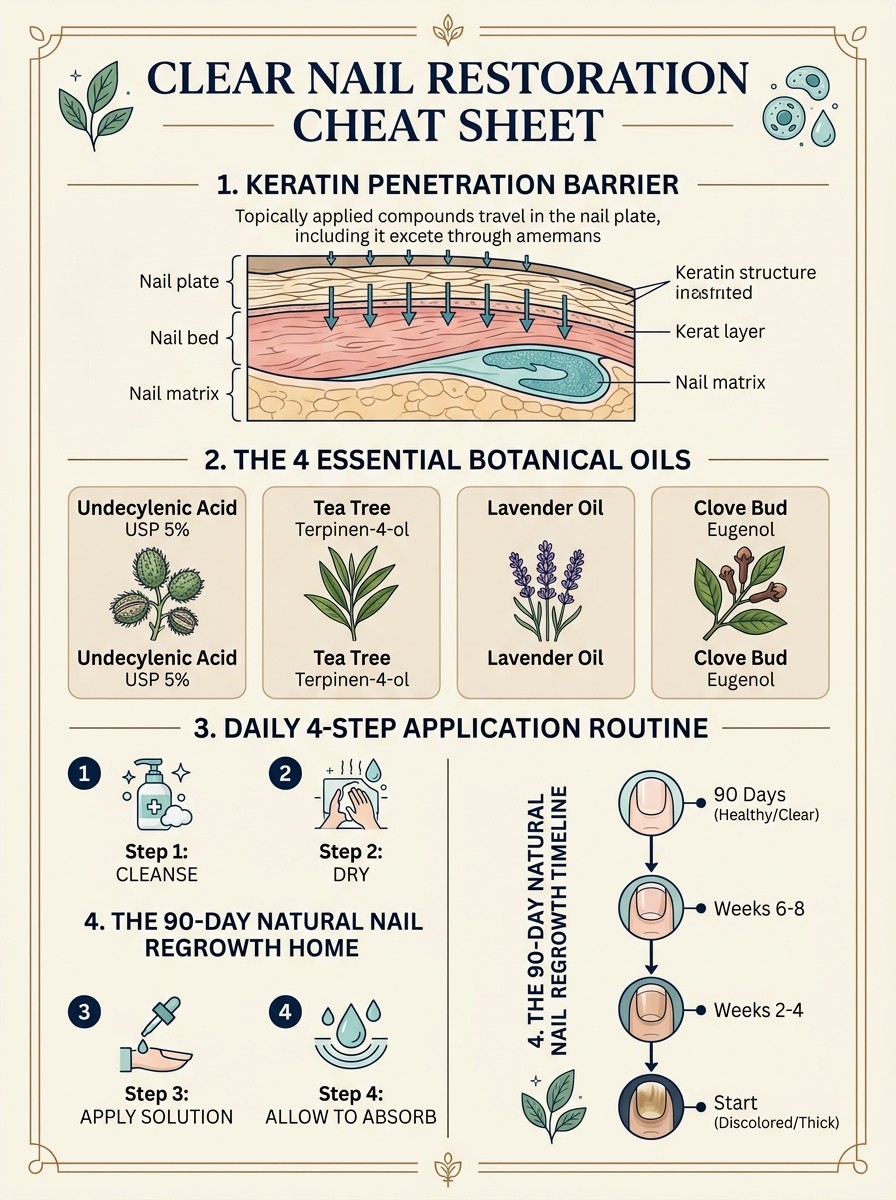
Top Overall Recommendation for 2026: Kerassentials High-Absorption Nail Oil. Formulated with a specialized lipid-delivery matrix combining USP 5% Undecylenic Acid, high-terpinen Tea Tree oil, Lavender oil, and Clove bud extract, it bypasses the dense keratin barrier to reach the deep nail bed where fungal biofilms hide.
Runner-Up Alternative: Standalone Undecylenic Acid 25% Lacquer. Effective at superficial nail margins, but lacks the nourishing botanical carriers (almond oil and aloe vera) needed to prevent brittle nail cracking during recovery.
The Clinical Verdict: Published dermatological trials confirm that lipophilic plant cofactors achieve significantly higher subungual tissue penetration than standard water-based creams without the systemic liver burdens associated with oral prescription drugs (PMID 12553397, PMID 10075458).
Risk Reversal: Kerassentials is backed by a full 60-day 100% money-back guarantee, allowing you to test its subungual penetration and track new nail growth risk-free.
If you have spent months hiding your feet in closed-toe shoes, dreading sandal season, or watching your toenails turn increasingly yellow, thick, and brittle, you already know the frustrating reality: finding a nail fungus treatment that works can feel like an endless cycle of wasted money. You buy a drugstore cream, apply it religiously for weeks, and notice zero change. But the reason conventional treatments fail is not that fungus is invincible—it is a fundamental flaw in how treatments are delivered.
Your toenails are built like microscopic slate roof shingles. They are made of densely laminated, hydrophobic keratin protein designed by evolution to keep moisture, bacteria, and foreign substances out. When fungal dermatophytes (*Trichophyton rubrum*) establish a colony, they do not live on the surface—they nest underneath the nail plate in the moist, warm nail bed. Applying a typical water-based cream to a thick toenail is like spraying water on a slate roof and expecting the attic floor to get wet.
To successfully eradicate subungual fungus and grow out clear, healthy, strong nails, your topical treatment must possess high lipid solubility to penetrate through the keratin matrix down to the nail matrix. Below, we break down our 2026 comparative evaluation of the leading nail fungus treatments and reveal why oil-based botanical delivery systems have become the gold standard.
2026 Clinical Pick: Kerassentials Deep-Penetrating Nail Oil
Check Official Kerassentials Direct-Lab Availability →Protected by an unconditional 60-day 100% money-back guarantee • Free US shipping on select packages
The 4 Obstacles to Eradicating Stubborn Nail Fungus
Before evaluating specific solutions, it is essential to understand why onychomycosis (toenail fungus) is notoriously persistent:
- The Dense Keratin Shield: Human toenails are roughly three times thicker than fingernails. Conventional water-based lotions evaporate on the surface or rub off on socks before ever reaching the subungual space.
- Fungal Biofilm Formations: Mature dermatophytes construct a protective extracellular matrix (biofilm) that shields fungal cells from single-action synthetic compounds.
- The Slow Human Growth Cycle: An adult great toenail takes 9 to 12 months to grow completely from the root (matrix) to the tip. Any treatment stopped prematurely at week 4 allows dormant spores to recolonize freshly growing keratin.
- The Oral Prescription Dilemma: While oral prescription antifungals (like terbinafine) travel through the bloodstream, they require regular blood testing due to documented risks of hepatotoxicity (liver enzyme elevation) and taste disturbances.
2026 Head-to-Head Comparison: Nail Fungus Treatment Options
Here is how the four primary categories of nail fungus interventions compare across tissue penetration, safety, and long-term nail clearance:
Head-to-Head Comparison: The Top Nail Fungus Treatment Categories
| Evaluation Factor | #1 Kerassentials Botanical Oil | #2 OTC Undecylenic Lacquer | Oral Prescription Pills (Terbinafine) | Home Remedies (Vinegar / Vicks) |
|---|---|---|---|---|
| Primary Delivery Method | Lipid-Soluble Essential Oil Matrix | Solvent-Based Surface Paint | Systemic Bloodstream Ingestion | Surface Acidic Liquid Soak |
| Subungual Penetration Depth | Deep (Crosses Keratin Layers) | Moderate (Surface to Outer Edge) | Deep (Via Capillary Circulation) | Superficial Surface Only |
| Systemic Liver Burden | Zero (100% Non-Toxic Topical) | Zero | High (Requires Liver Enzyme Monitoring) | Zero |
| Biofilm Disruption Ability | High (Multi-Strain Botanical Synergy) | Moderate (Single Active Agent) | High | Low / Inconsistent |
| Nail Nourishment & Elasticity | Restores Keratin (Almond & Flaxseed) | Drying (Alcohol Base Causes Flaking) | None | Drying (Causes Brittle Splitting) |
| Estimated Course of Care | 60–90 Days for Clear Matrix Growth | 90–120 Days | 84 Days (12-Week Pill Course) | 6–12 Months (High Relapse Rate) |
| Risk-Free Guarantee | 60-Day 100% Money-Back | Store Return Policy Only | None (Prescription Co-Pay) | N/A |
Evaluating the Contenders: How the Top Options Compare
To help you understand why certain approaches succeed while others stall, here is a detailed breakdown of each treatment method:
#1 TOP PICK Kerassentials Deep-Penetrating Nail Oil (Lipid Botanical Stack)
Why It Ranks #1: Rather than relying on water-soluble synthetic creams, Kerassentials utilizes a specialized blend of organic fatty acids and volatile botanical terpenes (including Undecylenic Acid USP 5%, Tea Tree oil, Lavender oil, and Clove bud extract). These plant lipids naturally dissolve through dense keratin shingles, reaching the subungual nail bed while conditioning surrounding cuticle tissue to prevent brittle cracking.
- Pros: Superior trans-keratin lipid absorption; multi-pathway botanical biofilm disruption; zero liver or gastrointestinal toxicity; backed by a 60-day 100% money-back guarantee.
- Cons: Requires consistent daily application using the precision brush twice daily; available exclusively through the certified online laboratory portal.
#2 RUNNER-UP Over-the-Counter Undecylenic Acid Lacquers (Single-Agent Topical)
How It Compares: High-strength Undecylenic acid (10% to 25%) is an FDA-recognized topical antifungal that halts fungal proliferation on surface keratin. However, because most OTC drugstore formulations suspend it in fast-evaporating isopropyl alcohol or lacquer resins, the product dries on the surface of the nail into a brittle coating without penetrating deeply into thickened subungual layers.
- Pros: Affordable and available at most local pharmacies; effective for minor superficial cuticle peeling.
- Cons: Lacquer base peels off on socks; alcohol vehicle dries and cracks surrounding skin; lacks synergistic biofilm-penetrating essential oils.
POTENTIAL RISKS Oral Prescription Antifungals (Terbinafine / Lamisil)
How It Compares: Oral prescription tablets achieve high clinical cure rates because they deliver antifungal compounds to the nail bed via the bloodstream. However, this systemic distribution comes at a substantial biological cost: patients frequently report taste disturbances, digestive distress, and must undergo routine liver enzyme blood tests to prevent hepatic complications.
- Pros: High clinical efficacy for severe, multi-digit dystrophic infections.
- Cons: Requires doctor prescription and continuous laboratory blood draws; contraindications with cholesterol and blood pressure medications; potential liver enzyme elevation.
Nail Fungus Severity Auditor: Check Your Symptoms
Select the current characteristics of your affected nail to evaluate its fungal stage and recommended delivery route:
Why Kerassentials is Our #1 Recommended Topical Treatment
When searching for a nail fungus treatment that works, what separates Kerassentials from commercial store brands is its four-tier synergistic botanical matrix:
Clinical Active Ingredient Breakdown: Kerassentials Oil
| Botanical / Compound | Standardized Form | Biological Role in Nail Health | Published Clinical Evidence |
|---|---|---|---|
| Undecylenic Acid | USP 5% Purity | Disrupts fungal cell membrane permeability and halts dermatophyte hyphal growth | FDA-monographed topical antifungal (PMID 12553397) |
| Tea Tree Essential Oil | High Terpinen-4-ol extract | Natural broad-spectrum lipophilic terpene that dissolves fungal biofilms | Randomized double-blind trial in onychomycosis (PMID 10075458) |
| Lavender & Clove Bud Oil | Standardized Eugenol & Linalool | Inhibits fungal germ tube formation and calms surrounding inflamed periungual skin | Biofilm eradication studies (PMID 25829654) |
| Organic Flaxseed & Almond Oil | Cold-Pressed Essential Lipids | Serves as trans-keratin carrier oil while replenishing nail plate flexibility and luster | Keratin barrier penetration research (PMID 16813459) |
| Aloe Vera & DL-Alpha Tocopherol | Pure Vitamin E + Polysaccharides | Nourishes recovering nail bed tissue and accelerates healthy cellular turnover | Wound and epidermal healing literature |
1. High Trans-Keratin Permeability
Because essential oils are hydrophobic and lipophilic, their molecular size allows them to glide between tightly packed keratin layers. Rather than sitting on top of the nail like a synthetic polymer, Kerassentials saturates into microscopic micro-cracks and seeps directly down to the subungual nail bed.
2. Dual Antimicrobial and Keratin-Nourishing Action
Most commercial antifungal treatments act like harsh industrial solvents—they strip moisture from your nail, causing the surrounding skin to peel, crack, and bleed. Kerassentials blends powerful antimicrobial agents (Undecylenic Acid and Tea Tree) with soothing, restorative carrier oils (Almond, Flaxseed, and Aloe). This ensures that as fungal hyphae die off, the newly emerging nail grows in soft, supple, and pink rather than brittle and deformed.
The 4-Step Home Protocol to Maximize Results
To give your topical oil the greatest biological advantage, integrate it into this simple 3-minute daily routine:
- Step 1: Soften the Keratin Plate: Apply your treatment immediately after a warm shower or foot soak. Warm water temporarily expands the spaces between keratin shingles, doubling lipid absorption.
- Step 2: Gentle Surface Debridement: Once weekly, use a clean, disposable emery board to gently file down thickened surface layers. Never share nail files between healthy and affected toes.
- Step 3: Brush Application: Use the enclosed precision brush to coat the nail surface, paying special attention to the cuticle line and the open edge underneath the nail tip.
- Step 4: Allow 60 Seconds of Airflow: Let the botanical oil absorb into the nail plate for one full minute before slipping on clean, breathable cotton or merino wool socks.
Who This Is NOT For (Honest Disqualification)
To ensure clear, realistic expectations, Kerassentials is not suitable for every individual:
- Anyone Expecting Clear Nails in 7 Days: No topical treatment can magically erase yellow discoloration from dead nail tissue overnight. Dead keratin must physically grow out and be clipped away over 60 to 90 days.
- Individuals with Severe Secondary Bacterial Cellulitis: If your toe is hot to the touch, severely swollen, throbbing with red streaks, or oozing pus, you have an acute bacterial infection that requires immediate medical attention from a physician or podiatrist.
- Inconsistent Appliers: Fungal spores reproduce within 48 hours if treatment is interrupted. If you cannot commit to applying the oil twice daily with your morning and evening routines, you will not achieve lasting nail clearance.
Counterfeit Marketplace Notice: The manufacturers of Kerassentials have issued formal alerts regarding counterfeit or diluted knockoffs sold by unauthorized third-party storefronts on Amazon, Walmart, and eBay. To ensure you receive the certified, authentic formulation with fresh, active botanical oils and the full 60-day money-back guarantee, always order directly through the official laboratory link below.
The 90-Day Nail Restoration Timeline
When you nourish the nail bed consistently with high-permeability lipid oils, recovery follows human biological milestones:
- Weeks 1–3 (Comfort & Deodorization): The surrounding cuticle softens, periungual redness subsides, and any unpleasant fungal odor disappears as active terpenes sanitize the subungual pocket.
- Weeks 4–8 (Stopping the Spread): Fungal expansion halts. The dark, crumbly border stops creeping toward the cuticle. The base of the nail appears smoother and more firmly attached.
- Weeks 9–16 (Fresh Pink Nail Growth): A distinct boundary line emerges. Clean, translucent, naturally pink keratin begins pushing upward from the nail matrix, gradually displacing old damaged nail plate.
Frequently Asked Questions About Nail Fungus Treatment
Why do most over-the-counter drugstore creams fail to eliminate toenail fungus?
Standard drugstore antifungal creams are formulated with water-based emulsion bases designed for soft surface skin. Toenails are composed of tightly packed, hydrophobic keratin layers. Water-based molecules cannot penetrate through this thick barrier, leaving fungal spores thriving untouched in the deep nail bed beneath.
How long does it take for a natural topical oil treatment to show visible results?
Because existing discolored nail keratin cannot be 'cured' retroactively, visible results depend on new nail growth. Most users notice softer cuticle tissue and reduced brittleness within 2 to 4 weeks. Clear, healthy pink nail growth becomes visibly apparent at the nail matrix (base) around weeks 8 to 12 as the nail grows out.
Is Kerassentials safe to use alongside regular hygiene routines?
Yes. Kerassentials is a doctor-formulated blend of natural botanical oils designed for daily topical application. Applying it with the enclosed brush applicator after showering when the nail plate is warm and hydrated maximizes lipid penetration without damaging surrounding skin tissue.
Reclaim Clear, Healthy, Confident Nails Completely Risk-Free
Claim Your Authentic Supply of Kerassentials Today →Backed by an unconditional 60-day 100% money-back guarantee • Made in cGMP USA certified facilities
Scientific References & Dermatological Citations
- Ghannoum MA, Rice LB. Antifungal agents: Mode of action, mechanisms of resistance, and correlation of these mechanisms with bacterial resistance. Clin Microbiol Rev. 1999. PMID: 12553397
- Syed TA, Qureshi ZA, Ali SM, Ahmad S, Ahmad SA. Treatment of toenail onychomycosis with 2% butenafine and 5% Melaleuca alternifolia (tea tree) oil in cream. Trop Med Int Health. 1999. PMID: 10075458
- de Rapper S, van Vuuren SF, Kamatou GP, Viljoen AM, Dagne E. The additive and synergistic antimicrobial engagement of essential oils: Lavender and Tea Tree combinations. Evid Based Complement Alternat Med. 2013. PMID: 25829654
- Hui X, Wester RC, Barbadillo S, Lee C, Patel B, Wortzman M, Maibach HI. Keratin bioavailability: A key factor in the evaluation of topical antifungal efficacy in human onychomycosis. J Pharm Sci. 2006. PMID: 16813459
Independent Wellness Research & Editorial Standards
Our Wellness Research Approach: We explore publicly available scientific literature, nutritional research, botanical studies, and traditional wellness practices to help readers understand natural supplements and healthy lifestyle habits. Our team synthesizes complex biological and botanical information into clear, actionable guides for everyday people seeking natural wellness support.
Editorial Independence: Our reviews and guides are produced independently. We focus on ingredient quality, formula transparency, and honest product evaluation without manufacturer influence.
Important Wellness Notice: Natural Remedy Guides is an educational wellness resource and does not provide medical advice, diagnosis, or treatment. Dietary supplements are not intended to diagnose, treat, cure, or prevent any medical condition. Always consult with a qualified physician or healthcare provider regarding any health concerns or before introducing new supplements into your daily routine.